
Reflections: Entry Point for Living Fully with Authenticity and Purpose as an Adoptive Family

by TRJ Executive Director, April Dinwoodie

As I reflect on my younger years as a transracially adopted person, I am filled with so many wonderful childhood memories with my sister, brothers, my parents and extended family. I am also filled with the memories of feeling isolated with my feelings and thoughts about adoption and differences of race.

My parents, busy as they were looking after us, were not in tune, and rhythm with some of the needs that I had as a Black/biracial transracially adopted person. We didn’t talk enough about the realities of separation from family of origin or differences of race, and I was left to navigate these big real realities mostly on my own.

Conversations: An Entry Point for Living Fully with Authenticity and Purpose

Today, I can confidently say that the entry point for living fully with authenticity and purpose as an adoptive family where difference of race is present, is grounding conversation that is ongoing and ever present in your daily life.

Adoption is both a journey rooted in love, and it’s also a path intertwined with unique challenges, especially when it involves racial differences. It’s crucial to recognize that adoption doesn’t just create your family; it weaves together origins, cultures, and backgrounds that may be vastly different.

Encouraging an Environment of Discussion

Start by encouraging an environment where questions and discussions about adoption and race are welcomed and encouraged. It’s important for children to feel safe in expressing their feelings and curiosities. This always starts with you.  So often, I hear parents say – “my child never asks me questions” or “they never really want to talk about adoption or our differences”.  Almost always the questions are there but the space to explore them is not. 

Getting more into the flow of ongoing conversation requires commitment from parents and caregivers as well as resources to support the effort.   Use books, movies, and cultural events as tools to celebrate your child’s heritage and your family’s multiculturalism. This not only helps them connect with their roots but also aids the whole family in understanding and appreciating culture, ethnicity and heritage more holistically.  Check out our book corner and conversation cards as you continually add to your tool kit. 

Connecting With Other Adoptive Families

Another way to scaffold your family is to connect with other adoptive families, especially those with similar dynamics. Sharing experiences and insights can be invaluable for both parents and children.  Transracial Journeys is excited to remind parents of a partnership that began in October 2023 with Adoption Network Cleveland to bring our parents the  Transracial Adoptive Parent Support Group. Join us Thursday, January 18, 2024 7:00pm-8:00pm and third Thursdays of each month.  Registration details can be found on the Adoption Network Cleveland website.

And finally, do not be ashamed or afraid to seek professional guidance from counselors or therapists, particularly those who specialize in adoption and multicultural families. They can provide strategies and support for navigating complex emotions and situations.  Here is a state by state directory of mental health professionals who identify as adoptees and work with adoptees /adoptive families in a variety of public and private settings. This list was curated by Dr. Chaitra Wirta-Leiker and I encourage you to visit her website to learn more. 

Remember, these conversations are not a one-time event but an ongoing dialogue that evolves as your child grows. It’s about building a foundation of trust, understanding, and respect for your child’s unique identity and your families unique reality. 

This post is from our January, 2024, newsletter. If you would like to get our newsletter in your inbox each month, as well as information about our annual Transracial Journeys Family Camp and our monthly Zoom call to provide support for our transracial adoption parents please subscribe.

Book Corner – January 2024

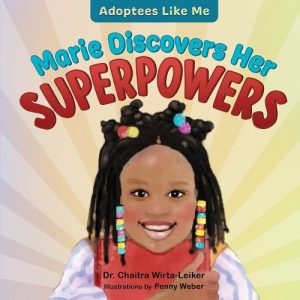
This month we are highlighting "Adoptees Like Me" Books, a special series from Dr. Chaitra Wirta-Leiker.  These illustrated children’s books are for elementary readers, and include Marie Discovers Her Superpowers  (2022) and Casey Conquers Bedtime (2023).

Dr. Wirta-Leiker is an adoptee, adoptive parent, and psychologist. She is a consultant for The Adoptee Mentoring Society and a contributor to I AM ADOPTEE, where she serves on their subsidized mental health program review board. She also served on the Adoptee Advisory Board for Heritage Camps for Adoptive Families and the steering committee for the Society of Adoption Professionals of Color in Adoption. You can find her series here

Marie Discovers Her Superpowers
Casey Conquers Bedtime

Book Recommendations for Families Created in Transracial Adoption

The Book Corner is a regular feature in our Transracial Journeys monthly newsletters. If you would like to receive monthly book recommendations via email, please subscribe.


Black Excellence: Taraji P. Henson – Actress

By April Dinwoodie, TRJ's Executive Director

Taraji P. Henson began her professional acting career in the late 90’s after graduating from HBCU, Howard University. For nearly three decades she has lite up our screens with her talent and grace. She has won a Golden Globe Award as well as being nominated for an Academy Award and four Primetime Emmy Awards.

Taraji made her film debut in the crime film Streetwise (1998), gained recognition for her role in Hustle & Flow (2005). For her role in The Curious Case of Benjamin Button she earned her a nomination for the Academy Award for Best Supporting Actress. In 2016, she portrayed mathematician Katherine Johnson in Hidden Figures. She has also acted in Baby Boy (2001), The Karate Kid (2010), Think Like a Man (2012), Acrimony (2018), What Men Want (2019), and The Best of Enemies (2019). Henson has also been prolific in television acting. From 2011 to 2013, she co-starred as Joss Carter in the CBS drama series Person of Interest. From 2015 to 2020, she starred as Cookie Lyon in the Fox drama series Empire, for which she won the Golden Globe Award for Best Actress – Television Series Drama and was nominated for Primetime Emmy Awards in 2015 and 2016. Her other Emmy-nominated roles were for the Lifetime movie Taken from Me: The Tiffany Rubin Story (2011) and for her guest role in the ABC sitcom Abbott Elementary (2023). In 2016, Time named Henson one of the 100 most influential people in the world. Later that year, she released a New York Times best-selling autobiography titled Around the Way Girl. In 2019, she received a star on the Hollywood Walk of Fame.

Most recently, Taraji stars in the Color Purple playing Shug Avery, the beautiful, vivacious, and flamboyant blues singer. For this role, Henson adds singer to her list of gifts and talents she shares with the world. During the media interviews for the film, Henson has been vocal about the heavy lift that professional Black women have in Hollywood (and generally) and the inequities in pay they face. “I’m just tired of working so hard, being gracious at what I do, getting paid a fraction of the cost,” Henson told Gayle King on December 19. “I’m tired of hearing my sisters say the same thing over and over. You get tired. I hear people go, ‘You work a lot.’ I have to.”

The beauty, strength and grace from Taraji P. Henson is Black excellence personified and there are so many reasons to hold her up as an example for us all.


The Gift of Growing up with Books to Reflect a Diverse Human Experience

by TRJ Parent and Librarian, Avril McInally

Image from The Ezra Jack Keats Foundation

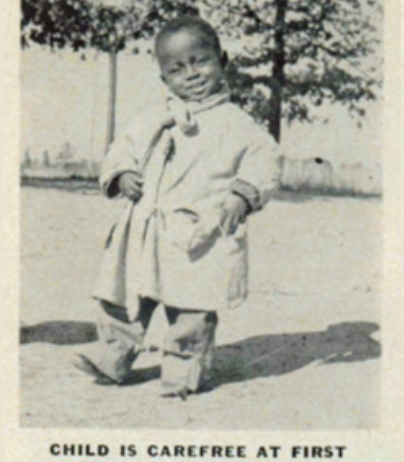
Meet “Peter” the small African-American child who inspired Ezra Jack Keats “The Snowy Day”.

Ezra had noticed that the main characters in the books he illustrated were always white. That didn’t seem fair to other children, who deserved to see characters in books that looked like them. He decided that Peter would be the hero of his story because “he should have been there all along.”

Origin of the Annual TRJ Bibliography

A few years ago and with a similar thought in mind, I (TRJ parent and librarian, Avril McInally) thought about searching for books for Black children with characters that look like them and reflect their experience. Then, I thought of finding books featuring characters who were adopted, biracial or LGBTQIA+. So began the annotated bibliography for families formed by transracial adoption in 2021.

A year later, Vicki Richards, a children’s librarian stepped in to help find and vet these books too because, unfortunately, some still don’t quite get the adoption experience right. For the last few years, we’ve been reading lots of books and reviewing them.

2023 Bibliography for the Giving Season and All Year Long

This year, we’re attaching the 2023 Bibliography to this month’s newsletter so you can work to:

  • Support authors and illustrators who are POC (people of color)
  • Support a small, but growing group of authors who are adoptees
  • Give books to our children and families so they can see reflections of themselves in them
  • Give books to white children and families to help them understand the perspective of children who are Black or queer or who have experienced adoption
  • So you don’t miss the boat on giving your children the opportunity to grow up with beautiful books, stories and characters that reflect their experiences

I recommend supporting independent bookstores, especially Black-owned ones and purchasing your books directly from them. If you want to visit a brick-and-mortar shop and don’t know where to find one, just call your local public library and ask a librarian to help you locate one. We have also included links to each book as found on bookshop.org which helps to support independent bookstores.

I’ll see you at TRJ camp in Athens, Ohio next summer with a fully-stocked book sale featuring our book picks for 2024!

Avril

This post is from our December, 2023, newsletter. If you would like to get our newsletter in your inbox each month, as well as information about our annual Transracial Journeys Family Camp and our monthly Zoom call to provide support for our transracial adoption parents please subscribe.

Book Corner – December 2023

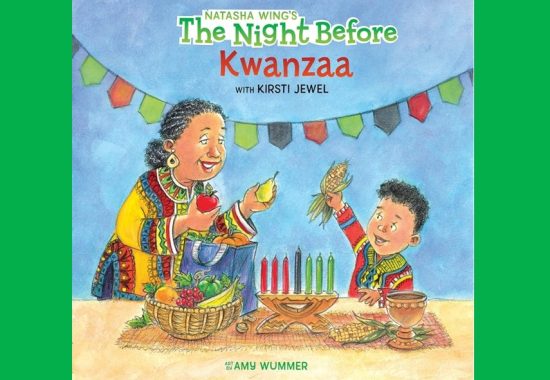
The Night Before Kwanzaa

By Natasha Wing
Illustrated by  Amy Wummer and Kirsti Jewel
Pre-kindergarten - Grade 2 

A young boy is excited for the arrival of his older brother. He is looking forward to celebrating Kwanzaa with him and the rest of their family. As a candle is lit on the Kinara each night, simple (yet heartwarming) illustrations depict the accompanying seven principles of Kwanzaa.

There is a familiarity in this sweet book as it may remind older readers of “The Night Before Christmas” - one of the most well-known poems about the holiday.

This is a recommended read for multicultural families as it blends an old tradition (reading the old poem) with new ones (celebrating the principles of Kwanzaa).

Books for Transracial Families

Book Recommendations for Families Created in Transracial Adoption

The Book Corner is a regular feature in our Transracial Journeys monthly newsletters. If you would like to receive monthly book recommendations via email, please subscribe.


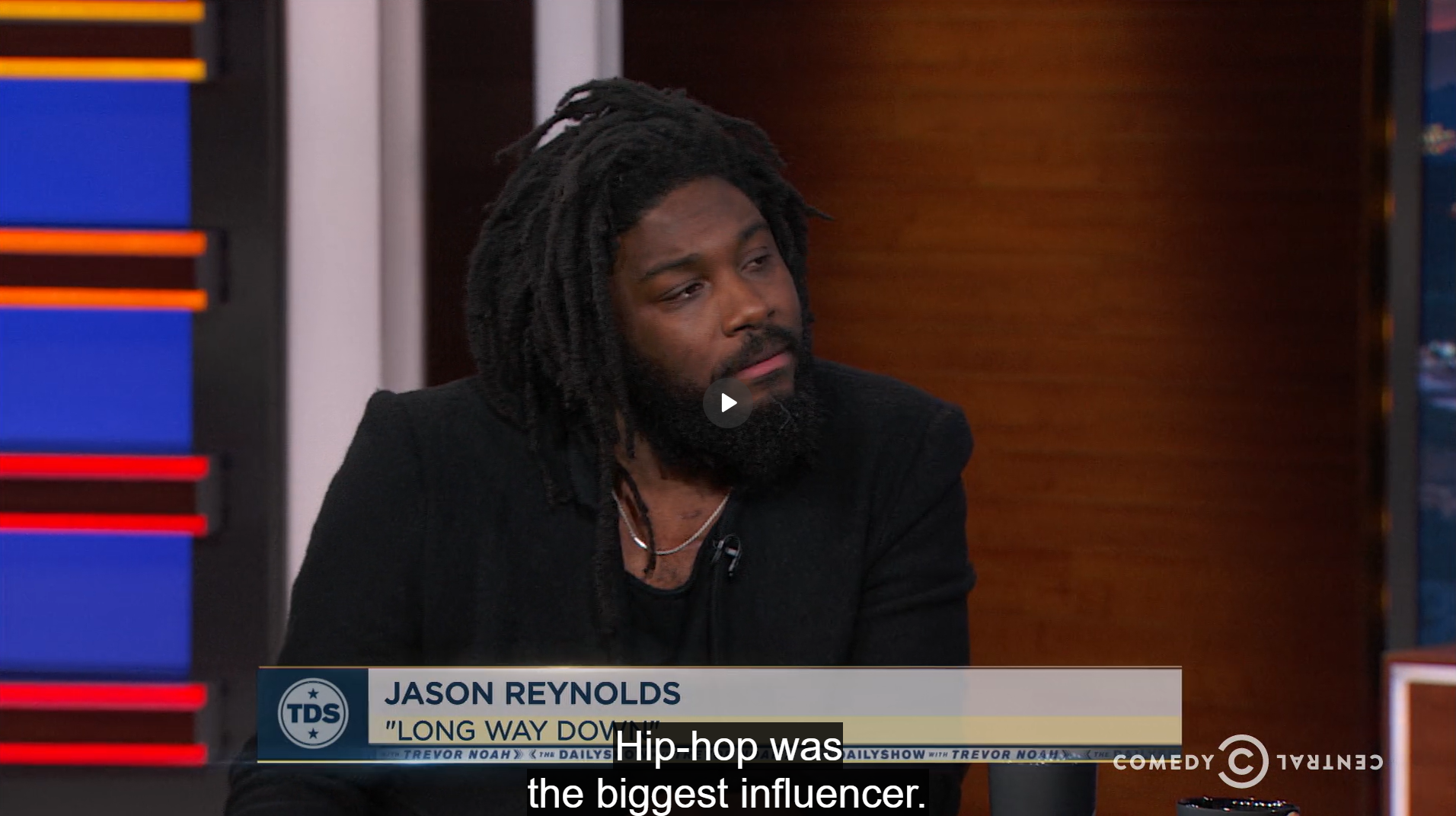
Black Excellence: Jason Reynolds

By TRJ Parent Rebecca Howerd

Jason Reynolds is a highly acclaimed and influential author known for his impactful contributions to contemporary literature, particularly for youth, as well as his activism and his approachability and service to kids and young adults. Born in 1983 outside Washington, D.C., Reynolds has risen to prominence for his ability to authentically capture the experiences of Black youth in America while dismantling stereotypes and creating empathy and positive self- and societal perceptions of Blackness. His work is not merely storytelling; it is a profound act of bearing witness to the lives, struggles, joys, and complexities of Black youth in America. Through his unflinching yet empathetic lens, Reynolds dismantles stereotypes, fosters understanding, and empowers a generation to see their own stories as valuable and worthy.

Reynolds started writing poetry when he was nine years old, inspired by Queen Latifa’s third album, Black Reign. Rap would continue to be his primary form of literary inspiration, because at the time there weren’t books about contemporary black youth experience, and for Reynolds, Rap gave him a sense of existence: “Rap music . . . let me know that who I already was was good enough.” This foundational connection to rhythm, rhyme, and authentic storytelling permeates his writing, often blurring the lines between poetry and prose. His ability to capture the vernacular, the humor, and the raw emotions of his characters creates an immediate and powerful connection with readers, particularly those who have long felt unseen in mainstream literature.

Reynold’s books, often written in verse, create a sense of connection and empowerment by portraying relatable characters living ordinary lives and facing issues that Black youth often grapple with and don’t often seen portrayed in “classic” literature. This authentic representation is a cornerstone of Black excellence in his work. He crafts characters who are fully realized individuals, navigating everyday life with all its nuances. He doesn't shy away from difficult realities like racism, poverty, and violence, but he also illuminates the resilience, strength, and love within Black communities. His characters are not monolithic; they are diverse in their personalities, interests, and experiences, reflecting the multifaceted nature of Black identity. For instance, in his Track series, each book centers on a different young runner with their own unique challenges and triumphs.

By centering Black youth in his narratives, Reynolds sends a powerful message of validation, fostering empowerment through visibility. He makes it clear that their stories matter, their voices are important, and their existence is significant. As he himself has stated, his books are "love letters to Black kids," acknowledging their presence and bearing witness to their lives. This visibility can be transformative for young readers who may finally see themselves reflected in literature in a meaningful and authentic way. Furthermore, Reynolds actively challenges harmful and limiting stereotypes often associated with Black youth. His characters are not simply defined by their struggles; they are also intelligent, creative, vulnerable, and full of potential. He portrays them as complex human beings with dreams, fears, and aspirations that transcend racial clichés.

Reynolds has actively advocated for increased diversity in literature and has been vocal about the need for more inclusive narratives. He emphasizes the importance of having stories that reflect the richness and diversity of the Black experience and has worked to promote literacy, frequently engaging with young readers through school visits, speaking engagements and initiatives to make literature more accessible. Beyond his writing, Reynolds' approachability and service to kids and young adults is a testament to his commitment to fostering a love of reading and storytelling within Black communities. His tenure as the National Ambassador for Young People's Literature saw him traveling across the country, engaging with young readers, and emphasizing the power of their own stories through his "GRAB THE MIC: Tell Your Story" platform, encouraging students to embrace and share their personal narratives, fostering a sense of ownership and empowerment through language.

While his focus is often on the Black experience, Reynolds' work also possesses a universal quality that resonates with readers of all backgrounds. By grounding his stories in relatable human emotions and experiences – grief, friendship, identity, and resilience – he fosters empathy and understanding across racial lines. His co-authored book All American Boys, which tackles the issue of police brutality from the perspectives of both a Black victim and a white witness, exemplifies this commitment to bridging divides.

Reynolds' exceptional contributions to literature have been widely recognized through numerous prestigious awards and honors, including multiple Coretta Scott King Book Awards, Newbery and Printz Honors, National Book Award Finalist distinctions, the Kirkus Prize, Carnegie Medal, NAACP Image Award, Margaret A. Edwards Award, and a MacArthur Fellowship. These accolades not only celebrate the quality of his writing but also underscore the profound impact his work has on young readers and the literary landscape.

In conclusion, Jason Reynolds is more than just a bestselling author; he is a cultural force. Through his powerful storytelling, his unwavering commitment to authentic representation, his passionate advocacy for young people, and his genuine service to his readers, he embodies Black excellence in its truest form. He has created a body of work that not only resonates deeply with Black youth but also invites all readers to engage with stories that are both deeply personal and universally relevant, fostering empathy, understanding, and a profound appreciation for the richness and complexity of the Black experience. His legacy will undoubtedly continue to inspire and empower generations to come.

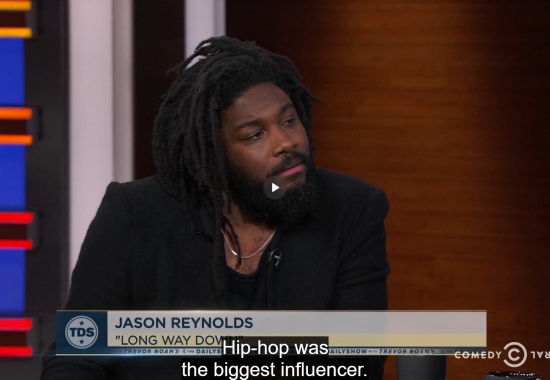
For more on this phenomenal game-changer, listen to his interview with Trevor Noah here: https://www.cc.com/video/avk8pe/the-daily-show-with-trevor-noah-jason-reynolds-serving-young-readers-with-long-way-down


Black Excellence: Marcus Samuelsson

By TRJ Parent Rebecca Howerd

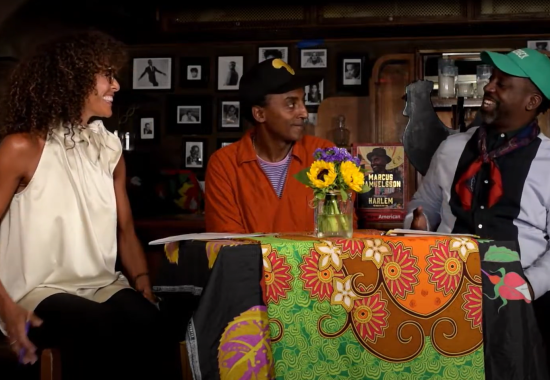
Marcus Samuelsson is a renowned chef, restaurateur, and author who has made a significant impact on the culinary world. Born in Ethiopia in 1971, he and his sister were adopted and raised in Sweden by parents who taught him confidence and humility. Samuelsson's empowering perspective on the power of blackness has given him the motivation and strength to stand out among his peers, while his multicultural background has been a driving force behind his innovative and diverse approach to food.

After honing his skills in several European restaurants, Samuelsson moved to the United States, where he gained prominence and has become widely recognized for his commitment to celebrating the rich tapestry of flavors and culinary traditions from around the world, blending his African, Swedish, and American influences into his cooking.

Samuelsson is a prolific author of books including a memoir, "Yes, Chef," which chronicles his journey from losing his mother to a tuberculosis epidemic that swept their village to becoming a celebrated chef and TV personality in the United States. As a Black chef in a predominantly White culinary industry, he has confronted challenges related to racism and discrimination, and he has used his platform to address these issues. Samuelsson has spoken about the disparities in opportunities and recognition that Black chefs and culinary professionals face, and throughout his career Samuelsson has worked to create opportunities for underrepresented groups in the culinary world.

Samuelsson uses food as a way to bridge cultural gaps and challenge stereotypes, and believes that his passion for cooking and the respect for hard work his parents taught him have helped him rise above the insecurities that can come from navigating life as a transracially adopted, Black, African immigrant.

By openly addressing racism, celebrating diversity, and advocating for change, Marcus Samuelsson has not only become a respected and influential chef but also a role model for those who aspire to overcome obstacles and contribute to a more inclusive and equitable world.

Learn more:

Watch Marcus Samuelsson speak with April and friend Louis Johnson in this powerful interview: Talking Adoption, Identity, and Family with Chef Marcus Samuelsson and guest-host Louis Johnson Jr.


Book Corner-November 2023

Our Little Kitchen

By Jillian Tamaki
Ages 4-8

This is a beautifully-illustrated, warm and cozy read with a focus on preparing food with love and with a group of diverse children and adults. Highly recommended not just for Thanksgiving but for any part of the year when you want to pull comfort from the words you read along with the pictures you see.

Jillian Tamaki is an award winning, Canadian author who shows how to build community, love and nurture around the preparation of food in a fun and whimsical manner.As the characters ask the following questions, you could ask the same of the children you’re reading the book with:

● Is your body warm?
● Is your belly full?
● Would you like seconds?

Book Recommendation for Transracial Adoptive Families

Book Recommendations for Families Created in Transracial Adoption

The Book Corner is a regular feature in our Transracial Journeys monthly newsletters. If you would like to receive monthly book recommendations via email, please subscribe.


Beyond Words: Sustaining Strong and Healthy Families

by TRJ Executive Director April Dinwoodie

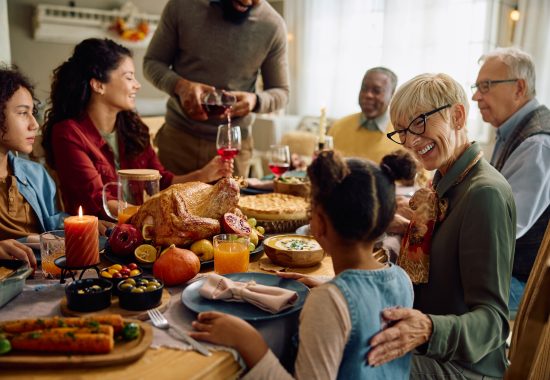
Generosity and good heartedness are core values in the family system I was adopted into.  Throughout the year and especially during at the holiday season,  you’ll hear members of my family saying, "There is always room at our holiday table." It's a sentiment that suggests inclusivity and kindness and it feels good to open hearts and home to folks that may need a seat at your family table. 

With this spirit and with amazing cooks in the mix, on any given Sunday or holiday, there is a mix of family and friends, old and new, around our dining table. Laughter, love, and abundance fill the space and it’s hard not to feel blessed to have been enveloped into this warmth. At the same time, there were members of my family of origin that hung at the edges. As extended family and friends gathered round our table, I could not help but wonder where my extended family of origin were where? What were their holiday cultural traditions? And what was it like to look around a table and see genetic mirrors and physical resemblances?

Adoption is often characterized as a beautiful and transformative journey that brings families together. It is often accompanied by the sentiment, "There is always room at our table," reflecting the openness and love adoptive parents have for the children entrusted to them through adoption. However, when these words are spoken while family of origin are not welcomed, it raises important questions about the true meaning of inclusivity within the adoption experience.

The Importance of Family of Origin Inclusion:

Family of origin is an intrinsic part of identity and heritage for all human beings. Excluding family of origin from the adoptive family's table sends a message that their role and connection are not valued or acknowledged. It is essential to recognize that an adopted person’s story is not complete without healthy connections to the family that came before adoption. Excluding them not only denies the child their full history but can also create feelings of loss, confusion, and a sense of divided loyalty.

Adoption requires parents to center on true inclusivity and shift from merely extending words of welcome to actively fostering connections with family of origin. Here's how adoptive parents can challenge the status quo and create a more inclusive environment:

See Family of Origin as Your Family too:

I often hear adoptive parents speaking about an adopted person’s family of origins as “their family” when in reality, it’s really “our family.” Even with the complexities of family separation, abuse and neglect, there are ways to be in relationship with even the idea of family of origin with open, truthful, and age-appropriate conversation. In order to fully embrace family of origin, parents must first internalize their feelings connected to the kin of the child. This is big human work and with supports as needed, community to validate the difficulties, and with the best interests of children at the center, these important connections are possible.

Building Bridges, Not Barriers:

View the family of origin as potential partners and positive influences in the child's life. If healthy relationships are not possible, there are other complications with the contact and previous abuse and neglect, you may have to work hard to make sure there is at the very least a conversational connection to family of origin. By integrating the appropriate level of discussion and action surrounding family adoptive parents demonstrate a commitment to inclusivity and recognize the value of the child's entire support network and the importance of healthy identity.

Celebrate Shared Moments:

For more practiced families, incorporation of the family of origin into significant events and milestones in the child's life can be transformational. Birthdays, graduations, and holidays can be celebrated together, creating an inclusive environment where a child does not feel they have to choose which family they want to celebrate with. If there is not an opening for connections to family of origin, you can engage in active dialogue about the family that is not always present to acknowledge and honor the child's roots, traditions, and cultural heritage.

Create Opportunities for Conversation:

Take the lead in fostering a supportive environment where children feel comfortable discussing and exploring their feelings about family connections. Encourage open conversations about adoption and provide resources that help them understand and navigate your unique family dynamics. By acknowledging and validating emotions, parents can help their children develop a healthy sense of self and identity. The November conversation cards help set the tone and guide discussions.

Remember, as adoptive parents, when you say, "There is always room at our table," are you truly open to any and all pulling up a chair? Inclusion goes beyond words; it requires active efforts to build bridges, promote open communication, and celebrate shared moments. By recognizing the importance of family of origin, adoptive parents can create a more culturally appropriate and nurturing environment for children. Only by embracing the full spectrum of a child's identity and heritage can we truly honor the spirit of adoption and create a more inclusive, loving, and supportive family dynamic.

I sought out my family of origin and am in connection with many family members on my maternal side but we have yet to all sit down at the holiday table together. My hope is that your children get connected to origins in whatever way possible with you by their side with open hearts and minds.

This post is from our November, 2023, newsletter. If you would like to get our newsletter in your inbox each month, as well as information about our annual Transracial Journeys Family Camp and our monthly Zoom call to provide support for our transracial adoption parents please subscribe.

Black Excellence: Eartha Kitt

By TRJ Parent Rebecca Howerd

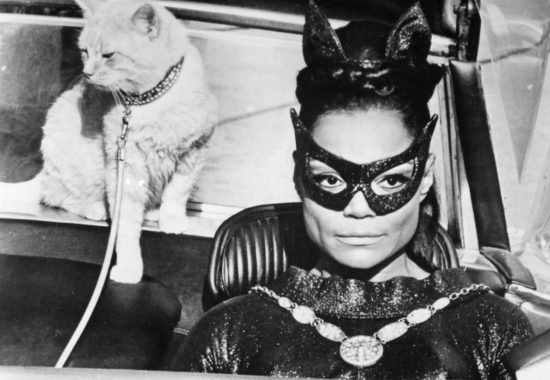
Eartha Kitt is known for popularizing the iconic Christmas song, “Santa Baby,” as well as her role as Catwoman in the 1960s tv show, Batman. But she was so much more. Her career spanned almost 70 years, and most of those were during a time when racism and sexism created insurmountable obstacles for any Black and Native American woman pursuing a career of any kind.

Born in 1927 in South Carolina. Her mother was a Black and Cherokee sharecropper and her father, the white son of the plantation owner, did not seek a consensual relationship with her mother. Kitt picked cotton before moving to Harlem when she was 16, where she became a dancer and toured with the Katherine Dunham Company for five years.

Eartha Kitt wore a literal mask in her role as Catwoman, but how many other invisible masks did she wear in her life? Code switching is a form of masking that many find helpful while navigating workplaces and social gatherings where respectability politics control whether or not you will encounter discrimination.

Kitt went on to perform on Broadway, become a popular singer and recording artist, be nominated for two Tony Awards, write three autobiographies, and was an actor and voice actor in film and tv right up until just before her death in 2008. It’s impossible to endure the rejection (perceived or real) of a parent, the violence and discrimination caused by racism and sexism, and grow as a creative public figure without hiding parts of yourself nearly constantly in some way. But Eartha Kitt also generously took her masks off in order to advocate for marginalized groups, despite intense political and economic consequences. Most notable are her ongoing public support of the LGBTQ+ community as well as the time when she spoke against the Vietnam War at a White House luncheon in 1968. These remarks effectively ended her career in the United States for ten years, during which time her LGBT supporters kept her name alive.

Kitt performed in numerous nightclubs and was active in Civil Rights communities throughout her life. Eartha Kitt was a strong, independent artist unwilling to let discrimination dictate how far she could go.

Each person in the transracial adoption community has potentially many intersections of identity to navigate in a world that often does not honor all of them at once, and at times none at all. When is it good to have a mask on and use it as a tool? For preserving energy, for protection or for art or even just for fun?

Learn more:
When Eartha Kitt Condemned Poverty and War at the White House
1982 Documentary: All By Myself, The Eartha Kitt Story
NYT Obituary: Eartha Kitt, A Seducer of Audiences, Dies at 81